
The routine work, off the desk.
These are the mappable, workflow-shaped jobs that drain a broking back-office: the ones scored ≥70 on volume, repetitiveness, cost of error, data messiness, compliance load and integration difficulty. Each runs end-to-end against Acturis, cites its rules, and stops at a person when it matters.
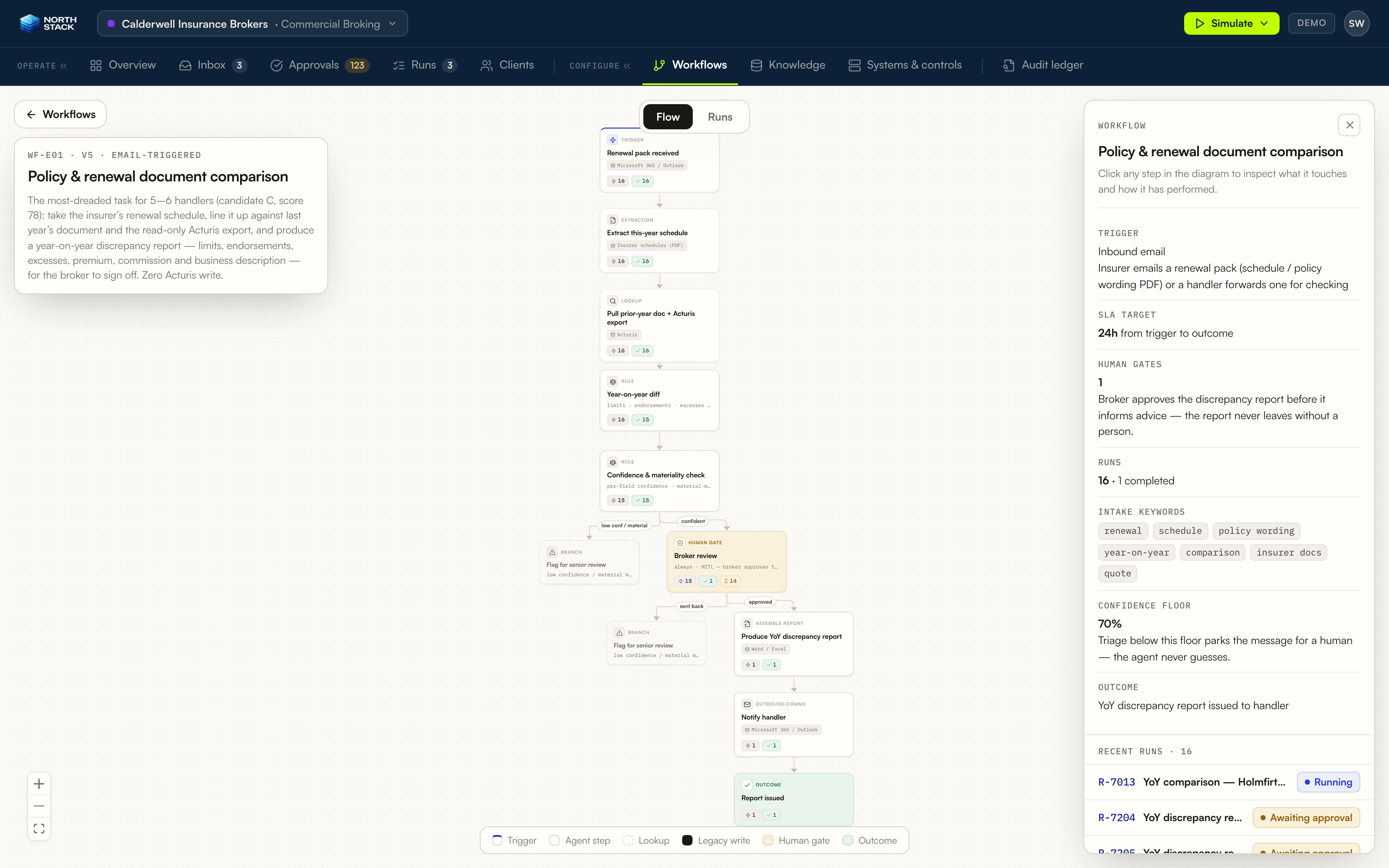
Renewal comparison
The agent pulls the expiring cover and the renewal terms side by side, flags what moved on premium, excess, endorsements and subjectivities, then drafts the client-ready comparison against the workflow you mapped.
- Reads the renewal invitation from the inbox
- Cites the appetite and pricing sheet row-by-row
- Stops at a human gate before anything goes to the client
Letter drafting
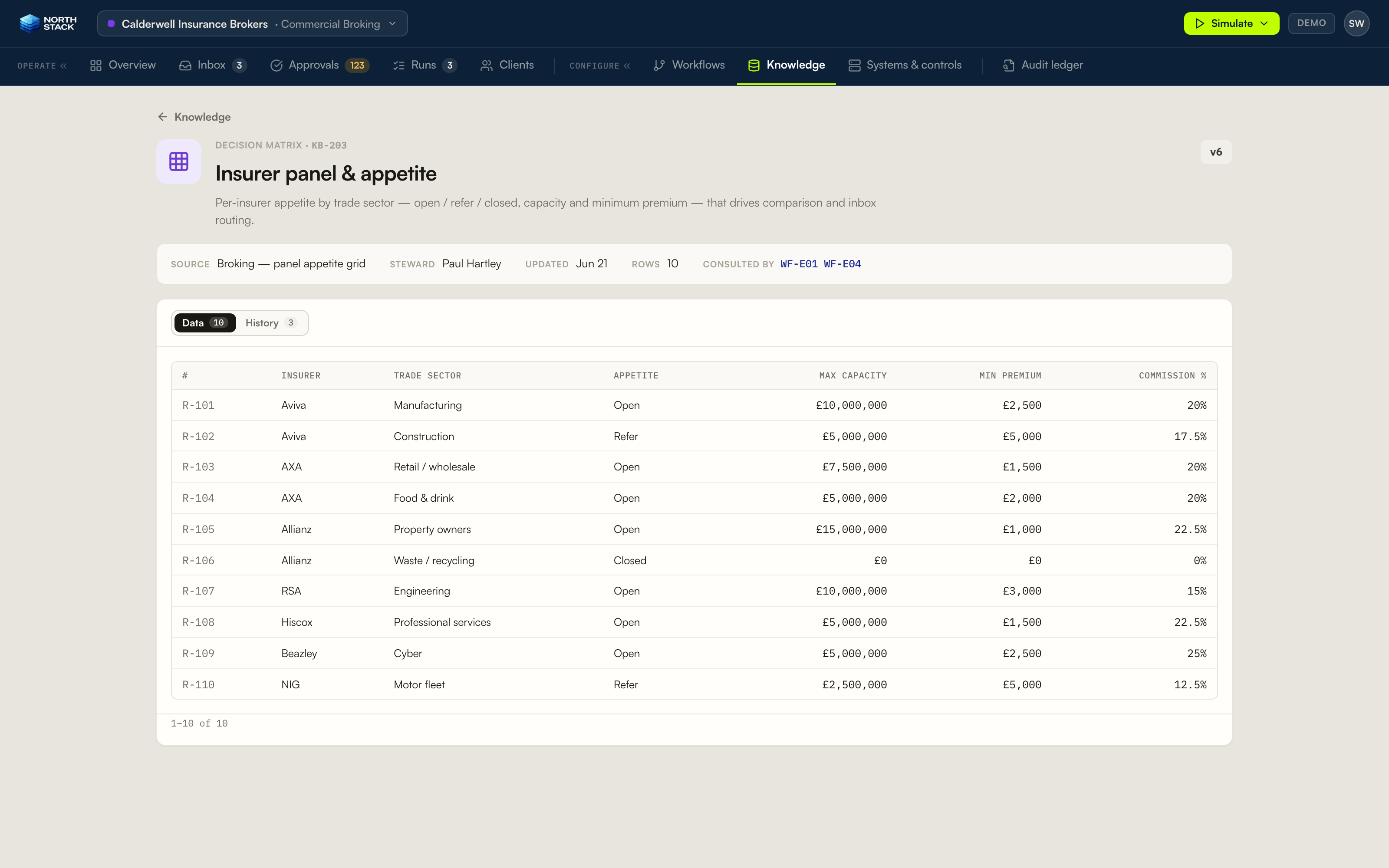
Routine client and insurer letters such as evidence-of-cover, chasing subjectivities and renewal reminders, drafted from your templates and versioned knowledge sheets. Nothing is invented; everything is grounded in the record.
- Grounded in your own versioned templates
- Every figure cited to the sheet it came from
- Handler approves and sends, with no auto-commit
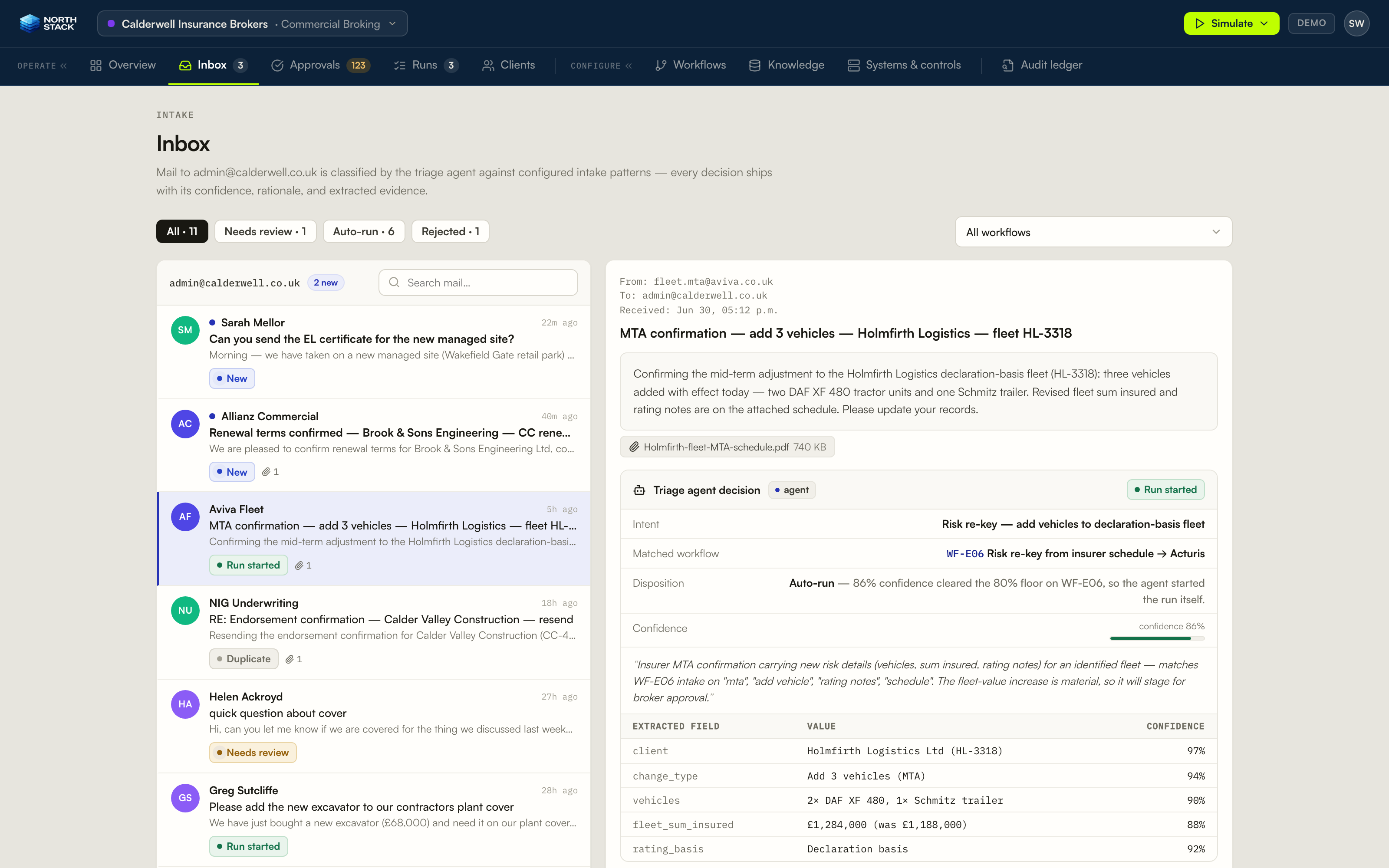
Claims record search
A claims FNOL or query lands in the inbox; the agent finds the matching client and policy record, gathers the related documents, and assembles the acknowledgement so the handler starts from a complete picture, not a blank screen.
- Triages the claims inbox to the right workflow
- Finds the record in Acturis via the UI, no API
- Surfaces the uncertain cases to a person
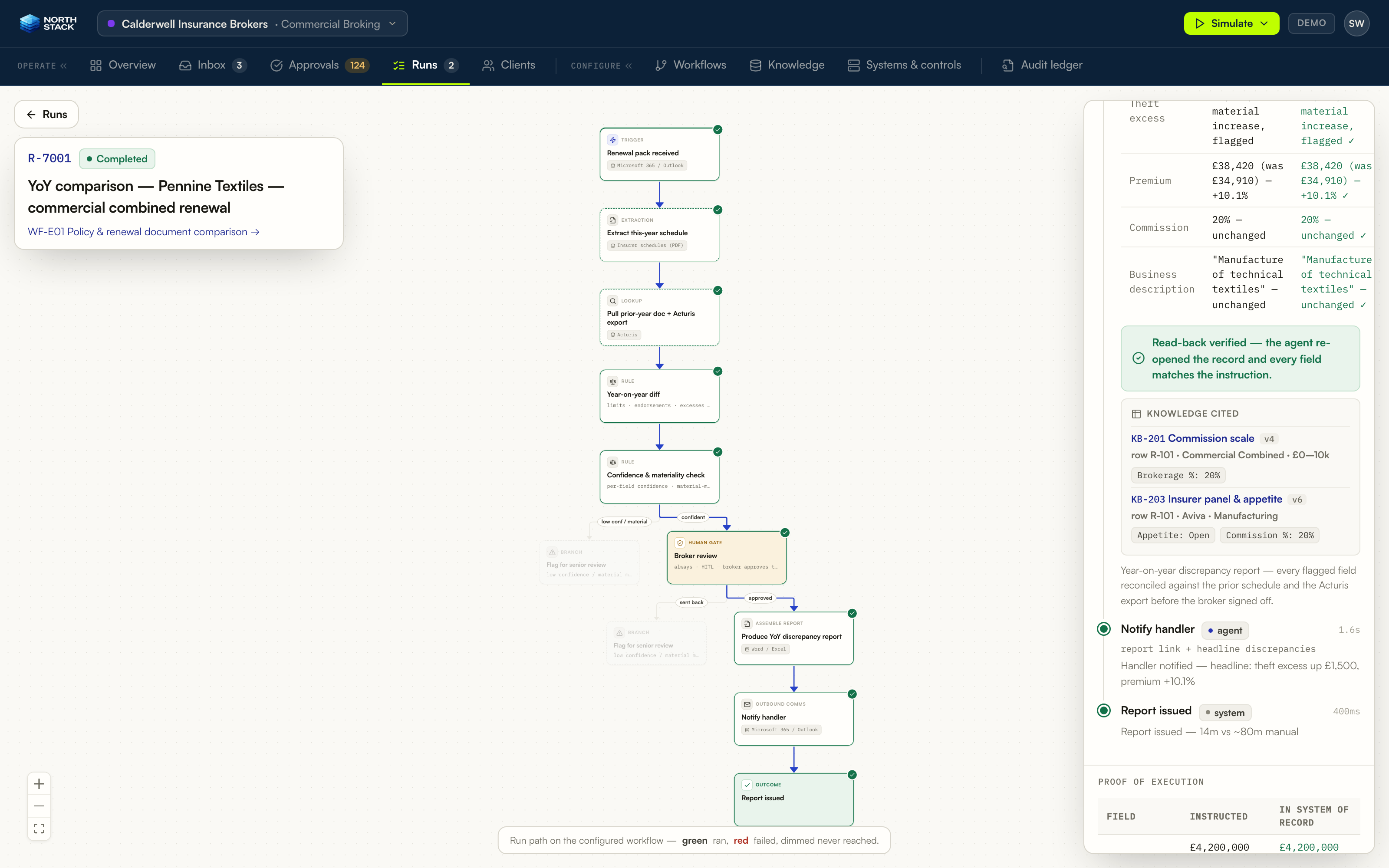
Risk re-keying
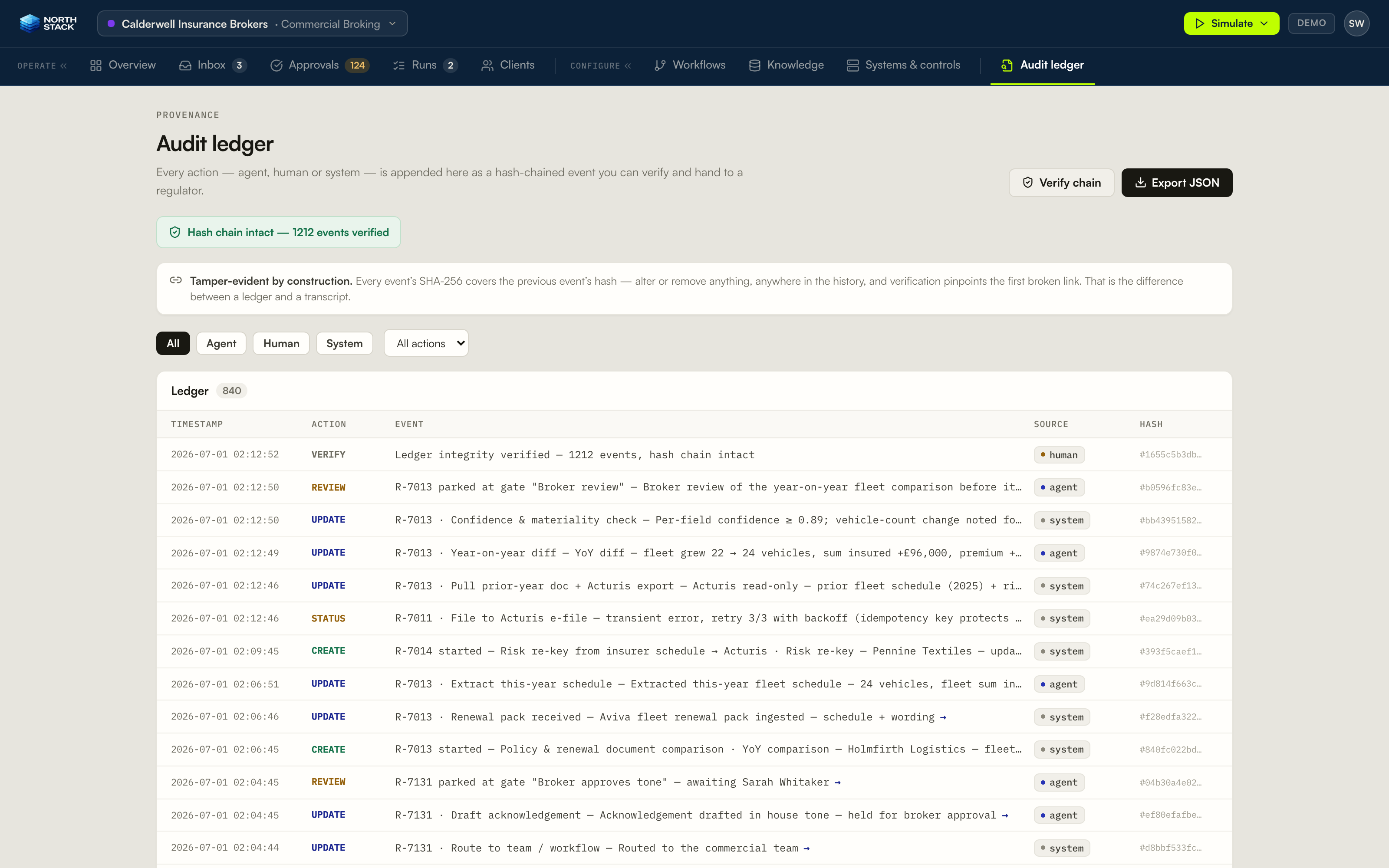
The endless part, re-keying risk data from an insurer PDF or schedule into Acturis, runs end-to-end, with a field-by-field read-back against the system of record so what was written matches what was intended.
- Reads the schedule, keys it into Acturis as-is
- Read-back verification holds accuracy at 96.8%
- Discrepancies routed to a handler, not written blind
MID & regulatory filing prep
Preparation for regulated filings, such as Motor Insurance Database updates, is assembled and checked, then held at a permanent hard gate. No regulator submission is ever auto-committed, and the whole run is on the ledger.
- Assembles and validates the filing data
- Hard human gate before any regulator submission
- Every step tamper-evident and exportable for the FCA
What clearing these gets Calderwell back.
Across these workflows, our demo broker, Calderwell Insurance Brokers, hands back about 214 handler-hours a week: roughly 5.7 FTE of capacity and £223k a year, before counting rework and compliance-risk savings.